
Advertisements
Today, with home offices and hybrid models, calling apps have become essential. They allow teams to connect from anywhere, increasing productivity and collaboration.
But how do you choose the right app? Pay attention to audio and video quality, security, and features like screen sharing and meeting recording. These are extremely important to keep everything running smoothly and professionally.
Advertisements
Want to know which are the best apps and what each one offers? Read on to find out which video conferencing app to use.
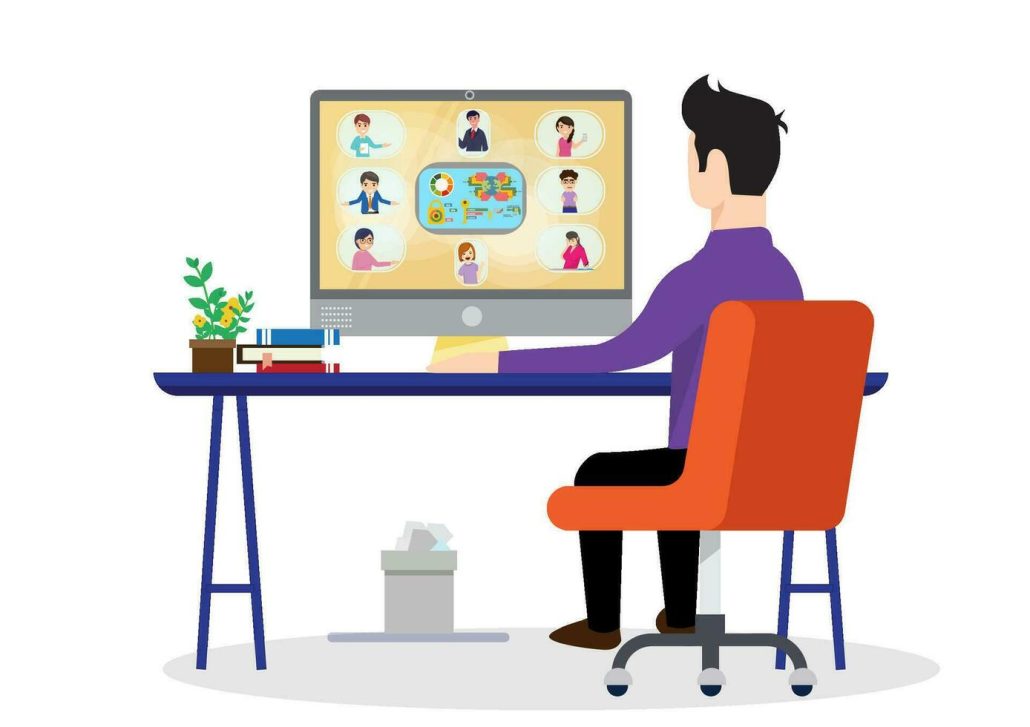
How to choose the best app for video conferencing?
Advertisements
When choosing a video conferencing app, the first thing to do is look for one with good audio and video quality. No one likes a fuzzy, crackly connection.
Another important point is ease of use. Ideally, both you and the meeting participants can join without any problems.
And don't forget to check if the app allows you to share your screen and record calls. This is very useful, especially if you're giving a presentation or want to review what was said afterward.
It's also worth considering the number of people the app supports. Some tools are ideal for small meetings, while others can handle conference calls with many people. This ensures everything runs smoothly and the meeting is productive.
Find the best app for video conferencing
Finding the right video conferencing app can make all the difference in your meetings and make everything more productive. With so many options available, it's a good idea to know what to look for before downloading.
Here are some tips to help you avoid mistakes: pay attention to the video and audio quality, because no one deserves to hear sibilance, right? And don't forget ease of use: ideally, you should be able to connect without any complications.
Features like screen sharing and the ability to record meetings are also very important. Consider how many people each app can handle so you don't feel cramped when you're on the call.
To help you, we've selected the five best apps, each tailored to different needs and ways of working. This way, you'll be sure to make the right choice.
1. Zoom
Zoom is undoubtedly one of the most popular video conferencing apps. It's perfect for work meetings, online classes, and even events.
In the free version, you can bring up to 100 people into the conversation, and it also has cool features like screen sharing, meeting recording, and creating waiting rooms.
Using Zoom is very simple: you create a room and send the link to everyone. It's easy to use, so even those who aren't very tech-savvy can use it stress-free.
Zoom's strengths include its excellent video and audio quality, and the fact that it works across multiple platforms, both mobile and desktop. And if you like using other tools, Zoom integrates with Google Calendar and Slack, which is perfect.
But beware: in the free version, meetings are limited to 40 minutes. If you need more time, you'll need to upgrade to a plan. To download it, just go to the official website or the app store. Compared to others, Zoom is super simple and very popular.
2. Google Meet
If you already use Google services like Gmail and Google Calendar, Google Meet is a great option.
It offers high-quality video conferencing and also supports up to 100 participants in the free version. The best thing about Meet is that it integrates with Google tools, making it easy to schedule meetings and set reminders.
It's very easy to use: just access the link generated in Google Calendar or Gmail, and that's it—you're in the meeting. Meet also has encryption security, and you can create slideshows, which is great for work or teaching.
While it doesn't have as many advanced features as Zoom, it's super reliable and very easy to use. To get started, simply go to the Google Meet website or download the app on your mobile phone.
If you're already familiar with Google Meet, you'll find it very easy and straightforward. So if you need something practical, it's worth a try!
3. Microsoft Teams
Microsoft Teams is much more than a video conferencing app; it's like a workspace where you can exchange messages, share files, and hold meetings all at the same time.
If you and your team use Microsoft 365, it's the best option! With it, you can hold video conferences with up to 300 people at once.
The good thing is that Teams is super easy to use. You can book meetings through Outlook or create a meeting room directly in the app. And best of all, you can work together on documents in real time while the meeting is taking place, and there's also a built-in chat to facilitate communication.
Another plus is security, as Microsoft ensures your data is well protected. But if you're just starting out, Teams may be a little confusing at first.
You can download the app or use the web version, which works just as well. Compared to Zoom and Google Meet, Teams is a more professional option.
4. Skype
Skype was one of the first to jump on the video calling bandwagon, and look, it's still a great option! It allows video calls for up to 50 people, which is perfect for those group chats or quieter get-togethers. Using Skype is super easy: you create your account and call people via the link.
Among the interesting features it offers, you can record calls, send instant messages, and share files. Best of all, you can call landlines and cell phones, even if the person doesn't have the app.
Of course, Skype isn't as interesting as it once was, but it's still a good option for those who like simplicity. Audio and video quality may vary depending on your internet connection, but it's easy to use.
You can download the app or access it directly through the web. Compared to Zoom and Teams, Skype is a bit simpler, but it's perfect for those who want something more basic and straightforward.
5. Webex Meetings
Webex Meetings is a tool that's making waves in the business world. It has many exciting features, including cloud recording and data analysis.
The free version allows you to hold meetings for up to 100 people. The atmosphere is very professional, and you can even customize the rooms to your liking.
Webex's advantages include high-end security and integration with other platforms such as Salesforce and Microsoft Office. Additionally, the video quality is excellent and the technical support is highly efficient.
But beware: using all the advanced features can be a bit complicated for beginners. To get started, simply visit the website or download the app.
When compared to Zoom and Teams, Webex wins in terms of security and business-oriented tools, making it a great choice for organizations that need something more professional.
See more:


 Spanish
  English
  French
  Italian
  Greek
Greek  Romanian
  Arabic
  Bulgarian
  Turkish
  German
  Portuguese
  Hindi
Hindi  Thai
Thai  Japanese
  Korean